
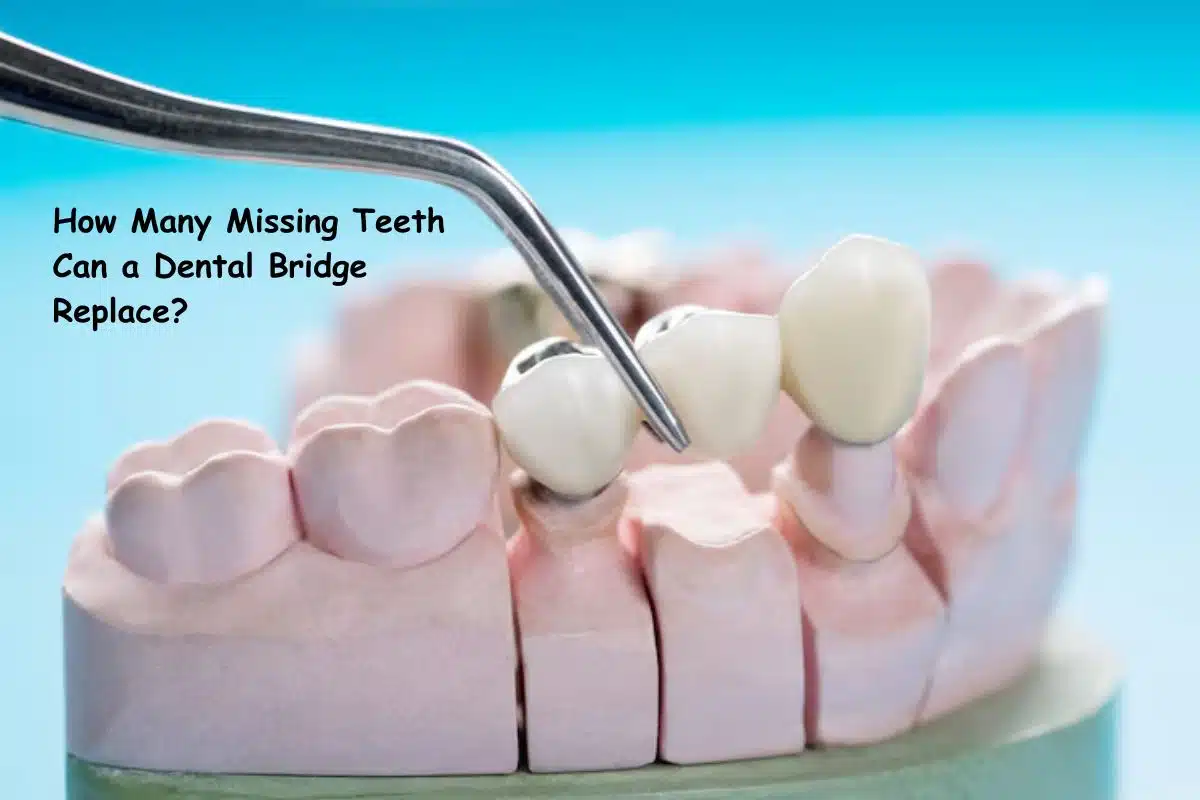
How Many Missing Teeth Can a Dental Bridge Replace?

July 10, 2024
Featured image for “How Many Missing Teeth Can a Dental Bridge Replace?”

Missing teeth can significantly impact oral health, confidence, and overall quality of life. A common and effective solution for replacing missing teeth is a dental bridge. But how many missing teeth can a dental bridge replace? In this blog, we’ll explore the ins and outs of dental bridges, their capabilities, and how a cosmetic dentist can help you restore your smile.

How Many Teeth Can a Dental Bridge Replace?

1. Single Tooth Replacement

Dental bridges are highly effective for replacing a single missing tooth. The bridge is anchored to the teeth on either side of the gap, restoring the function and appearance of your smile.

2. Multiple Teeth Replacement

A dental bridge can replace multiple missing teeth. However, the number of teeth that can be replaced depends on several factors, including the disappeared teeth’ location and the abutment teeth’ strength. Typically, a bridge can replace up to three or four teeth in a row. Beyond this, the bridge may become less stable and more prone to complications.

3. Long Span Bridges

In some cases, replacing a longer span of missing teeth is possible, particularly with implant-supported bridges. These bridges rely on the stability of dental implants, which are securely anchored into the jawbone, allowing for a more extensive restoration. A cosmetic dentist will evaluate your situation to determine if a long-span bridge is appropriate.

Factors Influencing the Number of Teeth a Bridge Can Replace

1. Health and Strength of Abutment Teeth

The abutment teeth must be healthy and strong enough to support the bridge. If the supporting teeth are weak or compromised, they may not be able to bear the additional load, limiting the number of teeth the bridge can replace.

2. Location of Missing Teeth

The position of the missing teeth also plays a crucial role. Bridges in the front of the mouth, where less force is exerted during chewing, can often replace more teeth than those in the back, with more significant biting pressure.

3. Type of Bridge

The type of bridge used will affect its ability to replace multiple teeth. Implant-supported bridges, for example, provide more excellent support and stability, allowing for replacing a more significant number of teeth.

Benefits of Dental Bridges

1. Improved Appearance

One of the primary benefits of a dental bridge is the cosmetic improvement it offers. Missing teeth can create gaps that affect your smile and overall facial structure. A dental bridge can fill these gaps, enhancing your appearance and confidence.

2. Restored Function

Dental bridges restore the function of your teeth, allowing you to chew and speak properly. This is particularly important for maintaining a balanced diet and clear speech.

3. Preventing Teeth Movement

When you have missing teeth, the surrounding teeth can shift into empty spaces, leading to misalignment and bite problems. A dental bridge helps prevent this movement, preserving the alignment of your teeth.

4. Long-Term Oral Health

By replacing missing teeth, dental bridges can help maintain the health of your remaining teeth. Filling gaps helps evenly distribute the forces in your bite, reducing the risk of damage to other teeth.

Why Choose a Cosmetic Dentist to Replace Teeth?

1. Expertise in Aesthetics

Cosmetic dentists specialize in improving the appearance of your smile. They are skilled in creating natural dental bridges that complement your facial aesthetics. When you choose a cosmetic dentist, you can be confident that your bridge will blend seamlessly with your natural teeth.

2. Advanced Technology

Cosmetic dentistry often uses advanced technology and materials to achieve the best results. Cosmetic dentists stay up-to-date with the latest techniques and tools, ensuring that your dental bridge is crafted with precision and care.

3. Comprehensive Care

A cosmetic dentist provides comprehensive care that addresses your oral health’s functional and aesthetic aspects. They will work with you to develop a treatment plan that meets your needs and helps you achieve a beautiful, healthy smile.

Dental bridges are a versatile and effective solution for replacing missing teeth, whether you need to replace single or multiple teeth. The number of teeth a bridge can replace depends on various factors, including the abutment teeth’ health, the missing teeth’ location, and the type of bridge used. Consulting with a cosmetic dentist ensures you receive expert care and a dental bridge that enhances your smile’s function and appearance. If you’re considering a dental bridge, contact a cosmetic dentist in Syracuse and nearby areas today to explore your options and start your journey toward a restored smile.


Share:
July 10, 2024

Missing teeth can significantly impact oral health, confidence, and overall quality of life. A common and effective solution for replacing missing teeth is a dental bridge. But how many missing teeth can a dental bridge replace? In this blog, we’ll explore the ins and outs of dental bridges, their capabilities, and how a cosmetic dentist can help you restore your smile.

How Many Teeth Can a Dental Bridge Replace?

1. Single Tooth Replacement

Dental bridges are highly effective for replacing a single missing tooth. The bridge is anchored to the teeth on either side of the gap, restoring the function and appearance of your smile.

2. Multiple Teeth Replacement

A dental bridge can replace multiple missing teeth. However, the number of teeth that can be replaced depends on several factors, including the disappeared teeth’ location and the abutment teeth’ strength. Typically, a bridge can replace up to three or four teeth in a row. Beyond this, the bridge may become less stable and more prone to complications.

3. Long Span Bridges

In some cases, replacing a longer span of missing teeth is possible, particularly with implant-supported bridges. These bridges rely on the stability of dental implants, which are securely anchored into the jawbone, allowing for a more extensive restoration. A cosmetic dentist will evaluate your situation to determine if a long-span bridge is appropriate.

Factors Influencing the Number of Teeth a Bridge Can Replace

1. Health and Strength of Abutment Teeth

The abutment teeth must be healthy and strong enough to support the bridge. If the supporting teeth are weak or compromised, they may not be able to bear the additional load, limiting the number of teeth the bridge can replace.

2. Location of Missing Teeth

The position of the missing teeth also plays a crucial role. Bridges in the front of the mouth, where less force is exerted during chewing, can often replace more teeth than those in the back, with more significant biting pressure.

3. Type of Bridge

The type of bridge used will affect its ability to replace multiple teeth. Implant-supported bridges, for example, provide more excellent support and stability, allowing for replacing a more significant number of teeth.

Benefits of Dental Bridges

1. Improved Appearance

One of the primary benefits of a dental bridge is the cosmetic improvement it offers. Missing teeth can create gaps that affect your smile and overall facial structure. A dental bridge can fill these gaps, enhancing your appearance and confidence.

2. Restored Function

Dental bridges restore the function of your teeth, allowing you to chew and speak properly. This is particularly important for maintaining a balanced diet and clear speech.

3. Preventing Teeth Movement

When you have missing teeth, the surrounding teeth can shift into empty spaces, leading to misalignment and bite problems. A dental bridge helps prevent this movement, preserving the alignment of your teeth.

4. Long-Term Oral Health

By replacing missing teeth, dental bridges can help maintain the health of your remaining teeth. Filling gaps helps evenly distribute the forces in your bite, reducing the risk of damage to other teeth.

Why Choose a Cosmetic Dentist to Replace Teeth?

1. Expertise in Aesthetics

Cosmetic dentists specialize in improving the appearance of your smile. They are skilled in creating natural dental bridges that complement your facial aesthetics. When you choose a cosmetic dentist, you can be confident that your bridge will blend seamlessly with your natural teeth.

2. Advanced Technology

Cosmetic dentistry often uses advanced technology and materials to achieve the best results. Cosmetic dentists stay up-to-date with the latest techniques and tools, ensuring that your dental bridge is crafted with precision and care.

3. Comprehensive Care

A cosmetic dentist provides comprehensive care that addresses your oral health’s functional and aesthetic aspects. They will work with you to develop a treatment plan that meets your needs and helps you achieve a beautiful, healthy smile.

Dental bridges are a versatile and effective solution for replacing missing teeth, whether you need to replace single or multiple teeth. The number of teeth a bridge can replace depends on various factors, including the abutment teeth’ health, the missing teeth’ location, and the type of bridge used. Consulting with a cosmetic dentist ensures you receive expert care and a dental bridge that enhances your smile’s function and appearance. If you’re considering a dental bridge, contact a cosmetic dentist in Syracuse and nearby areas today to explore your options and start your journey toward a restored smile.


Share: